Frequently Asked Questions
Have your questions answered
-
Shipping, Payments & Returns
Learn More -
Correct Product Selection
Learn More -
Personal Breathalyzer Information
Learn More -
Workplace Breath Testing
Learn More -
Workplace Drug Testing
Learn More -
Drug & Alcohol Testing Policy
Learn More -
Breathalyzer Recalibration
Learn More -
Register Your Breathalyzer
Learn More -
Technical Support Desk
Learn More
Shipping, Payments & Returns
We have 2 x shipping options:
• Uninsured: $12.97
• Insured: $14.97
Each of our breathalyzers comes with a warranty that varies between 12 and 36 months. To submit a warranty claim, please log in to your account.
All orders submitted prior to 9am each weekday will be shipped on the same day.
Yes, we can ship to PO Boxes.
At 7:30 PM on the shipment day, an invoice along with tracking information will be sent to your email. Furthermore, you can log into your account on this website to access the tracking and invoice details.
It may take as long as 24 hours for a parcel tracking to appear on the courier company’s website.
At times, packages may become lost. If this occurs, kindly contact us through our Contact Us webpage.
Credit Card, Google Pay, PayPal, Apple Pay, Afterpay, Bank Transfer (via email).
Our process for returning items can be found on our terms and conditions webpage here: Terms and Conditions.
Correct Product Selection
Mouthpieces are dishwasher-safe and can be reused in non-commercial settings.
To help you choose the right product for your needs, please click on the blue “Help Me Choose” button located at the top of every webpage. Additionally, you may refer to our three detailed Buying Guides. They can be accessed here: Personal Breathalyzer, Workplace Breathalyzer, or Workplace Drug Test Kits.
Personal Breathalyzer Information
Before taking the test, it is crucial to wait 15–20 minutes after your last consumption of alcohol, food, or other liquids before using your breathalyzer. For personal use devices, please allow a 3-minute gap between consecutive tests to allow the sensor to reset.
Avoid using hand sanitiser or any alcohol-based cleaning products near the testing area. Conducting tests outdoors can help reduce the risk of ambient readings. Make sure the mouthpiece is firmly attached, take a deep breath, and most importantly, blow steadily until you hear a click. Failing to blow consistently will result in an error, as the device will not receive a complete sample.
• To safeguard the unit, place it in a protective case to keep dust and particles from entering.
• Ensure it is stored in a dry location with temperatures not surpassing 40°C.
• Utilize alcohol-free wipes for cleaning when required.
• Refrain from exposing the device to excessive liquids or moisture.
• Avoid intentionally directing high concentrations of alcohol at the sensor, as this could negatively affect the calibration.
A considerable amount of consumed alcohol can be detected for up to 12 hours after drinking has stopped. However, there have been instances where alcohol has been registered 24 hours later.
Fuel-cell and semiconductor sensor breathalyzers evaluate alcohol concentrations through different mechanisms, resulting in notable variations in their precision, reliability, and susceptibility to interference.
Fuel cell breathalyzers function via an electrochemical reaction.
In the presence of alcohol in the breath, it is oxidized at the sensor’s surface, generating an electrical current that is proportional to the alcohol concentration.
Conversely, semiconductor sensors employ a metal oxide semiconductor that changes its electrical resistance when it comes into contact with volatile substances.
The production cost of semiconductor sensors is considerably lower compared to that of fuel cell sensors.
The amount of alcohol consumed — An increase in the number of drinks generally raises BAC to a greater degree.
The rate of consumption — Drinking alcohol quickly leads to a faster increase in BAC, as the liver has a limited ability to process alcohol.
Body weight and composition — Individuals with lower body mass or less body water content are more likely to reach a higher BAC from the same amount of alcohol.
Gender differences — Women often achieve higher BAC levels than men after consuming the same quantity, due to differences in body composition and alcohol metabolism.
Food intake — Consuming alcohol on an empty stomach results in quicker absorption of alcohol. In contrast, eating, especially foods high in fats and proteins, can slow down this absorption.
Alcohol content — Drinks with higher alcohol concentrations lead to a more rapid rise in BAC.
Medications and drugs — Some pharmaceuticals may enhance the effects of alcohol or impede its metabolism.
Metabolic rate and liver function — Differences in liver efficiency among individuals affect the speed at which alcohol is metabolized.
Age and health conditions — Older adults and those with certain health conditions may metabolize alcohol more slowly.
Carbonated drinks — Fizzy beverages like champagne or cocktails with soda can speed up alcohol absorption.
Hydration and fatigue — Dehydration and tiredness can worsen impairment, even if BAC levels remain unchanged.
Time since last drink — BAC rises during alcohol absorption and subsequently falls as the body metabolizes it.
The accuracy of a breathalyzer is influenced by the quality of its internal sensor and its overall design.
The fuel-cell sensor units offered by Breathalyzers New Zealand are exceptionally precise, with capability to measure to the thousandth decimal place.
It is essential to operate breathalyzers properly and to recalibrate them in accordance with the specific servicing needs of each model.
Upon consumption, alcohol is absorbed into the bloodstream and subsequently reaches the lungs. In the lungs, it vaporizes into the air contained within the alveoli, which are small air sacs. During a breath analysis, the exhaled air passes over an electrochemical cell, where the alcohol undergoes oxidation at the electrode, producing an electric current. The intensity of this current correlates with the concentration of alcohol in the breath, which the breathalyser then translates into a Blood Alcohol Concentration (BAC) reading.
Fuel-cell models typically offer 5 years+ of service if they are maintained within calibration and if the care guidelines are adhered to. However, as technology progresses, it is likely that a new device will need to be acquired.
In New Zealand, law enforcement upholds a maximum allowable Blood Alcohol Concentration (BAC) limit of 0.05% (250 mcg/L). For restricted licenses, which often apply to younger drivers or those with prior penalties, a BAC of 0.00% is generally required.
BAC stands for Blood Alcohol Content. BrAC denotes Breath Alcohol Content. In the realm of breath alcohol testing, these terms are effectively interchangeable. This is because a person’s blood alcohol concentration can be accurately and conclusively determined from a breath sample.
High-quality breathalysers require a warming period of 5 to 20 seconds for the sensor to attain the temperature of your breath, which is 34 degrees Celsius.
Generally, breathalyzers will need increasingly longer warming times when several tests are performed in rapid succession.
Your blood alcohol concentration (BAC) will rise when your body cannot metabolize alcohol as quickly as it is consumed.
Small amounts of alcohol can be quickly and completely metabolized and eliminated by the body. For example, after consuming a single standard drink, it is not unusual to find that there is no alcohol detectable in your system just 30 minutes later. The individual’s physiology plays a crucial role in this process. To check if a breathalyzer is registering alcohol, take a sip of an alcoholic beverage and then immediately blow into the device. Although the initial reading will be elevated and inaccurate, it should still indicate the presence of alcohol.
Many individuals have expressed surprise at their actual Blood Alcohol Concentration (BAC) readings, which often turn out to be lower than expected. Owning a breathalyser can greatly improve your understanding of how your body processes alcohol. Testing yourself at three-minute intervals is an effective strategy for accurately assessing your true BAC.
Workplace Breath Testing
Before taking the test, it is crucial to wait 15–20 minutes after your last consumption of alcohol, food, or other liquids before using your breathalyzer. For personal use devices, please allow a 3-minute gap between consecutive tests to allow the sensor to reset.
Avoid using hand sanitiser or any alcohol-based cleaning products near the testing area. Conducting tests outdoors can help reduce the risk of ambient readings. Make sure the mouthpiece is firmly attached, take a deep breath, and most importantly, blow steadily until you hear a click. Failing to blow consistently will result in an error, as the device will not receive a complete sample.
• To safeguard the unit, place it in a protective case to keep dust and particles from entering.
• Ensure it is stored in a dry location with temperatures not surpassing 40°C.
• Utilize alcohol-free wipes for cleaning when required.
• Refrain from exposing the device to excessive liquids or moisture.
• Avoid intentionally directing high concentrations of alcohol at the sensor, as this could negatively affect the calibration.
Please review our Workplace Breath Testing Compliance Guide, which can be found at the following link: Workplace Breathalyser Compliance Guide.
Your organisation’s Drug and Alcohol policy must clearly outline the testing procedures and the frequency of employee testing.
The most effective and least intrusive method for detecting alcohol is through a Passive Breath Screen, which should be succeeded by an Active Breath Test if the results of the breath screen suggest the presence of alcohol.
There is no legal requirement to finish a course prior to conducting alcohol testing in the workplace; however, the HLTPAT010 course for drug testing contains a small section on alcohol testing.
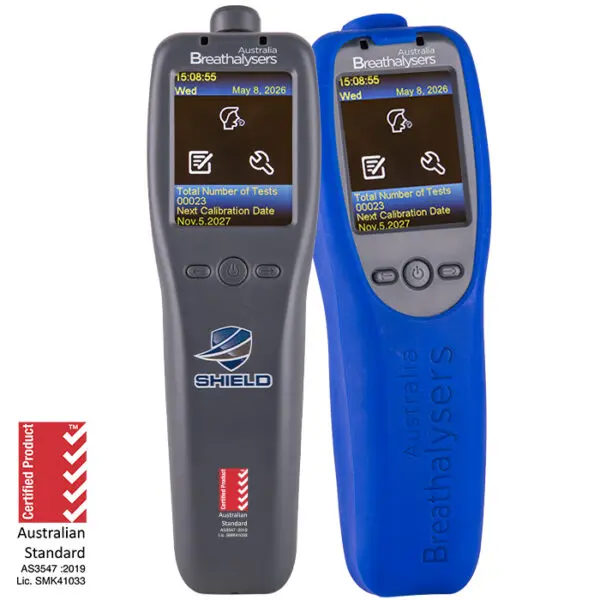
Breathalysers New Zealand provides assistance for understanding operation of the SHIELD series units as necessary.
A considerable amount of consumed alcohol can be detected for up to 12 hours after drinking has stopped. However, there have been instances where alcohol has been registered 24 hours later.
Fuel-cell and semiconductor sensor breathalyzers evaluate alcohol concentrations through different mechanisms, resulting in notable variations in their precision, reliability, and susceptibility to interference.
Fuel cell breathalyzers function via an electrochemical reaction.
In the presence of alcohol in the breath, it is oxidized at the sensor’s surface, generating an electrical current that is proportional to the alcohol concentration.
Conversely, semiconductor sensors employ a metal oxide semiconductor that changes its electrical resistance when it comes into contact with volatile substances.
The production cost of semiconductor sensors is considerably lower compared to that of fuel cell sensors.
Yes. Our breathalyzers are distributed through a wide range of retail networks and organizations that require testing across multiple locations. We are open to discussing bulk order purchases in more detail.
Additionally, we partner with smaller enterprises, including interlock installers who provide products to their customers. To make an inquiry, please click on this link. Contact Us.
The amount of alcohol consumed — An increase in the number of drinks generally raises BAC to a greater degree.
The rate of consumption — Drinking alcohol quickly leads to a faster increase in BAC, as the liver has a limited ability to process alcohol.
Body weight and composition — Individuals with lower body mass or less body water content are more likely to reach a higher BAC from the same amount of alcohol.
Gender differences — Women often achieve higher BAC levels than men after consuming the same quantity, due to differences in body composition and alcohol metabolism.
Food intake — Consuming alcohol on an empty stomach results in quicker absorption of alcohol. In contrast, eating, especially foods high in fats and proteins, can slow down this absorption.
Alcohol content — Drinks with higher alcohol concentrations lead to a more rapid rise in BAC.
Medications and drugs — Some pharmaceuticals may enhance the effects of alcohol or impede its metabolism.
Metabolic rate and liver function — Differences in liver efficiency among individuals affect the speed at which alcohol is metabolized.
Age and health conditions — Older adults and those with certain health conditions may metabolize alcohol more slowly.
Carbonated drinks — Fizzy beverages like champagne or cocktails with soda can speed up alcohol absorption.
Hydration and fatigue — Dehydration and tiredness can worsen impairment, even if BAC levels remain unchanged.
Time since last drink — BAC rises during alcohol absorption and subsequently falls as the body metabolizes it.
The accuracy of a breathalyzer is influenced by the quality of its internal sensor and its overall design.
The fuel-cell sensor units offered by Breathalyzers New Zealand are exceptionally precise, with capability to measure to the thousandth decimal place.
It is essential to operate breathalyzers properly and to recalibrate them in accordance with the specific servicing needs of each model.
Upon consumption, alcohol is absorbed into the bloodstream and subsequently reaches the lungs. In the lungs, it vaporizes into the air contained within the alveoli, which are small air sacs. During a breath analysis, the exhaled air passes over an electrochemical cell, where the alcohol undergoes oxidation at the electrode, producing an electric current. The intensity of this current correlates with the concentration of alcohol in the breath, which the breathalyser then translates into a Blood Alcohol Concentration (BAC) reading.
Fuel-cell models typically offer 5 years+ of service if they are maintained within calibration and if the care guidelines are adhered to. However, as technology progresses, it is likely that a new device will need to be acquired.
Passive tests offer quick screening and do not necessitate a mouthpiece. The individual either speaks or exhales into a sampling cup located at the top of the breathalyser, ensuring no physical contact is made. These tests reveal the presence or absence of alcohol and are less invasive. Should this screening test indicate alcohol, an active test is usually performed.
An active test requires a mouthpiece to be affixed to the device, allowing for a precise measurement of Blood Alcohol Concentration (BAC).
Devices like the SHIELD breathalysers can perform both types of tests and retain the data within the unit’s memory.
BAC stands for Blood Alcohol Content. BrAC denotes Breath Alcohol Content. In the realm of breath alcohol testing, these terms are effectively interchangeable. This is because a person’s blood alcohol concentration can be accurately and conclusively determined from a breath sample.
Your blood alcohol concentration (BAC) will rise when your body cannot metabolize alcohol as quickly as it is consumed.
Small amounts of alcohol can be quickly and completely metabolized and eliminated by the body. For example, after consuming a single standard drink, it is not unusual to find that there is no alcohol detectable in your system just 30 minutes later. The individual’s physiology plays a crucial role in this process. To check if a breathalyzer is registering alcohol, take a sip of an alcoholic beverage and then immediately blow into the device. Although the initial reading will be elevated and inaccurate, it should still indicate the presence of alcohol.
Many individuals have expressed surprise at their actual Blood Alcohol Concentration (BAC) readings, which often turn out to be lower than expected. Owning a breathalyser can greatly improve your understanding of how your body processes alcohol. Testing yourself at three-minute intervals is an effective strategy for accurately assessing your true BAC.
Workplace Drug Testing
Saliva drug screens are regarded as highly efficient for identifying recent drug consumption and are commonly implemented in workplaces throughout New Zealand. These tests aim to detect active substances that are presently in the body, rather than past usage. The accuracy of the results relies on proper sample collection, suitable storage conditions, and compliance with the manufacturer’s guidelines. In cases where confirmation is necessary, laboratory testing is advised.
Yes. We are available to talk further about bulk order purchases. To submit an inquiry, please follow this link: Contact Us.
Pre-employment drug screening is conducted before an individual begins their employment, allowing employers to evaluate if candidates adhere to the organisation’s drug and alcohol regulations.
Whereas random drug testing takes place during employment, frequently without prior notification, acting as a deterrent to substance use in the workplace. This method is essential for maintaining a safe work environment by identifying employees who may present risks of impairment.
Workplace drug screening is conducted in accordance with the company’s drug and alcohol policy. Common situations that necessitate testing include pre-employment evaluations, random screenings, post-incident assessments, inquiries based on reasonable suspicion, and screenings for return-to-work. Sectors that encompass safety-sensitive roles, such as mining, transportation, and construction, frequently implement stricter testing procedures to improve workplace safety, ensure regulatory compliance, and reduce risks.
Onsite drug screening provides rapid results within minutes, which contributes to its popularity in numerous fields such as workplaces, roadside inspections, legal environments, and healthcare. These tests are not only convenient and economical but also easy to conduct. Conversely, laboratory testing necessitates the transportation of samples to a certified laboratory for detailed analysis using specialized equipment. This approach generally offers a greater degree of accuracy and is frequently utilized when an initial test produces a not-negative outcome.
Saliva and urine drug tests are frequently employed for drug screening in the workplace. Nonetheless, they identify drug use in distinct ways. Saliva testing is effective in detecting recent drug use and is particularly useful for assessing impairment at the time of testing, which makes it well-suited for workplace and roadside scenarios. In contrast, urine testing identifies drug metabolites over an extended period, making it more appropriate for recognizing historical or habitual drug use potentially affecting the workplace. Saliva testing is less invasive, simpler to supervise, and yields quicker onsite results, whereas urine testing typically offers a longer detection window.
Yes. We are available to discuss bulk order purchases in more detail. To submit your inquiry, please click on this link. Contact Us.
HLTPAT010 pertains to the nationally recognized New Zealand training unit titled “Collecting Specimens for Drugs of Abuse Testing.” This course equips individuals with the necessary skills and knowledge to properly execute workplace drug testing procedures. The training encompasses specimen collection, testing methodologies, chain of custody protocols, privacy issues, and adherence to New Zealand Standards. It is frequently undertaken by workplace safety personnel, supervisors, and organizations overseeing internal drug testing initiatives.
The length of time drugs remain detectable in the body depends on various factors, such as the specific drug, usage frequency, individual metabolic rate, and the type of testing method used. Saliva tests are generally effective for detecting drug use within the past 24 to 48 hours, making them suitable for evaluating immediate impairment. Conversely, urine tests provide a wider detection window, which can last from several days to weeks, influenced by the drug type and the user’s consumption patterns. It is crucial to understand that detection times may vary from person to person, requiring careful analysis of the results.
A negative result indicates that the detected drug concentration is below the specified cut-off level for that substance, signifying no measurable presence above the testing threshold.
A not-negative result signifies that the drug concentration has surpassed the cut-off level, and additional confirmation testing may be necessary based on workplace policy.
A positive result is identified when the presence of certain drugs has been scientifically confirmed through further laboratory analysis, which may occur prior to any formal actions being implemented.
A false negative occurs when an individual has utilised an adulterant in an effort to alter the results.
Saliva testing provides rapid results, easy supervision, diminished privacy issues, and enhanced identification of recent drug use.
It is less intrusive and particularly appropriate for workplace settings.
Saliva testing typically has a shorter detection window in comparison to urine testing.
Urine testing, however, offers an extended detection timeframe and is more effective in identifying past or habitual drug use.
The optimal testing method is contingent upon the specific workplace application, compliance needs, and testing goals.
Purchasing drug and alcohol testing devices in bulk can lead to considerable cost reductions and enhance the efficiency of workplace testing. Organizations that routinely screen employees frequently opt to buy larger quantities to uphold compliance programs and lower the cost per test. Additionally, bulk purchasing guarantees a steady supply of stock and minimizes interruptions when testing is necessary. Breathalysers New Zealand provides discounts for bulk purchases, which can be found at the top of each of our drug testing product pages.
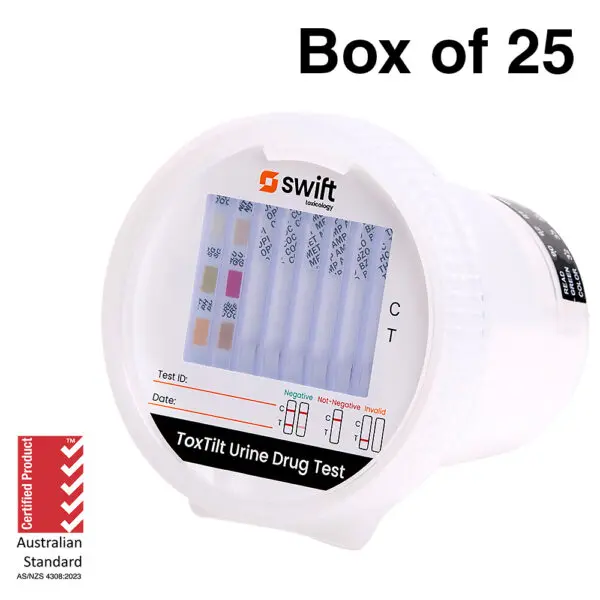
Most rapid drug tests utilise control and test lines to ascertain the outcome. A negative result generally displays both a control line and a test line, even if the test line is faint. A not-negative result typically presents only the control line, with no discernible test line for the substance being tested. If the control line is absent, the test is deemed invalid and must be redone with a new drug kit. It is essential to consult the product instructions for accurate interpretation.
A Chain of Custody (CoC) procedure is implemented to uphold the integrity and traceability of a drug screen from the moment of collection to the final result. It records the individuals who managed the sample, the time of collection, and any conditions of transfer or storage during the testing process. This procedure is particularly crucial for workplace compliance, legal issues, confirmatory laboratory testing, and scenarios where results could be disputed. Adhering to proper chain of custody protocols is essential for ensuring accurate, reliable, and defensible testing results.
Drug testing kits need to be kept in a cool, dry place, shielded from direct sunlight, moisture, and extreme temperatures. Exposure to high heat or humidity can compromise the performance and reliability of the testing device. Manufacturers advise that kits be stored at room temperature and that expiry dates be verified prior to use. Adhering to appropriate storage guidelines is essential for ensuring accurate and dependable test results.
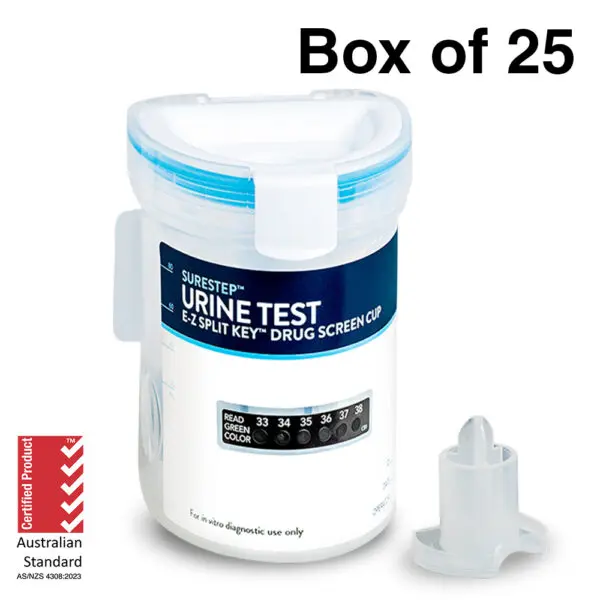
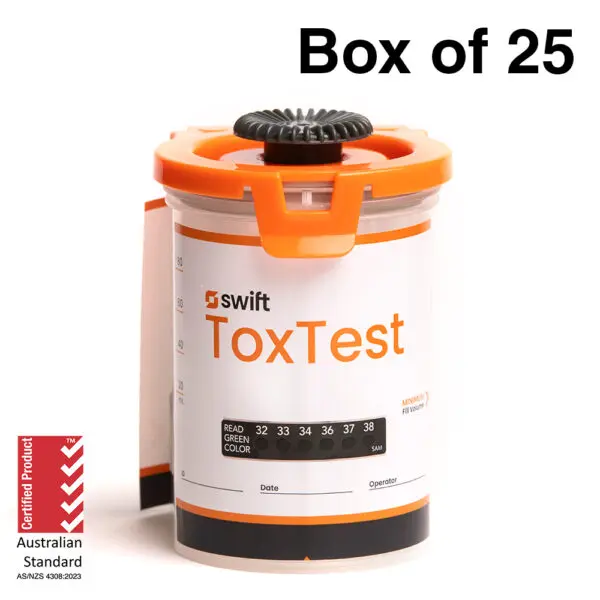
Human urine immediately donated usually has a temperature between 32°C and 38°C.
Samples that are outside this specified temperature range are considered invalid, as they may suggest possible tampering.
Certain prescription and over-the-counter drugs can influence the outcomes of drug screenings and may sometimes yield non-negative results.
Some medications may have components that resemble the substances being tested, potentially causing a reaction on the screening device. Therefore, it is important for individuals to inform the testing personnel about any medications they are taking prior to the screening.
In cases where a not-negative result is obtained, laboratory confirmation testing can ascertain whether the result is associated with the appropriate use of prescribed medications.
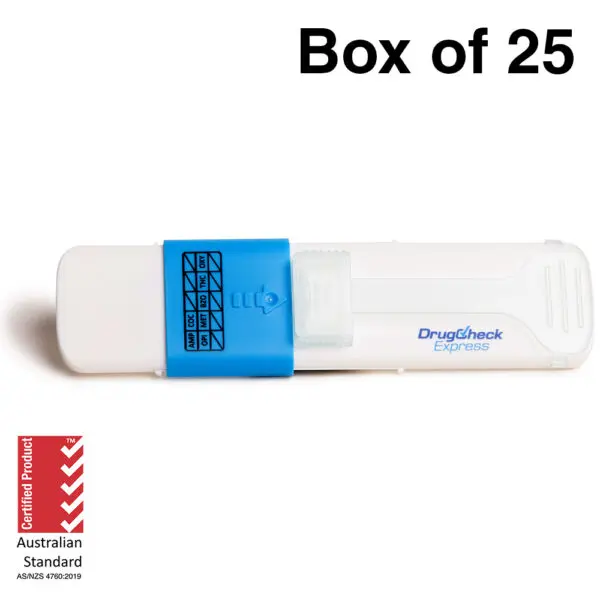
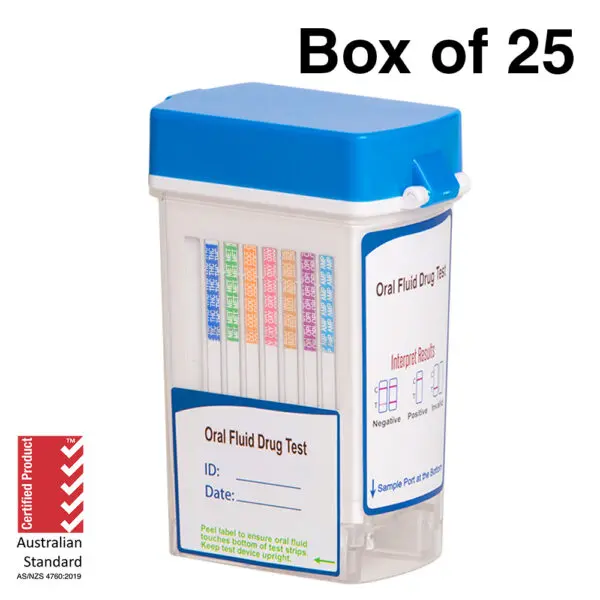
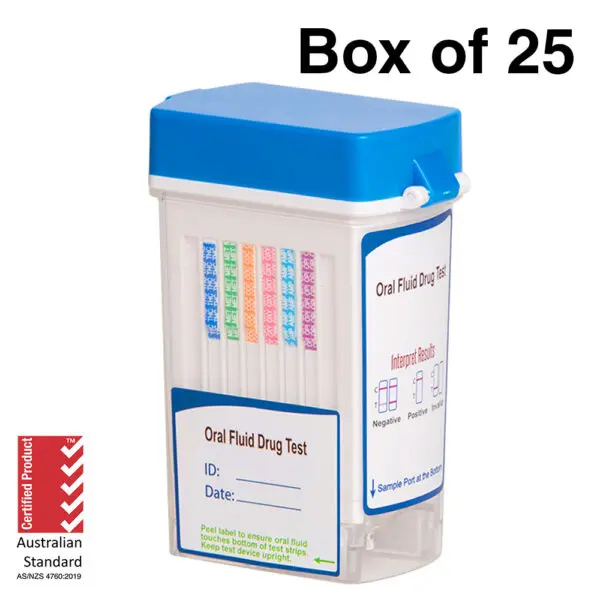
A “panel” denotes the number of drug classes included in a screening product that evaluates a single biological sample for the simultaneous detection of multiple drugs. These panels are visually indicated on the exterior of the testing device through coloured strips.
A 6-panel drug test assesses six distinct drug groups, whereas a 7-panel test evaluates seven. The six commonly tested drug groups include amphetamine, opiates, methamphetamine, cocaine, oxycodone, and cannabis (THC). The additional seventh panel typically tests for benzodiazepines.
The selection of the appropriate panel is contingent upon workplace policies and the specific requirements for drug class testing.
Drug testing devices function based on predetermined cut-off levels that ascertain whether a result is classified as negative or not-negative.
These cut-off levels are defined in accordance with New Zealand Standards and differ based on the substance being analysed.
If the concentration of the detected drug is below the established cut-off level, the result is deemed negative. Conversely, if the concentration surpasses the cut-off threshold, the result is categorised as not-negative.
Cut-off levels are essential for ensuring both accuracy and fairness, as incidental exposure or minimal usage may not adversely affect performance.
Adulterant testing is usually employed in urine analysis to identify dilution, substitution, or chemical interference. Whereas saliva testing involves collecting the sample directly from the mouth under supervision, which significantly reduces the likelihood of tampering.
Instead, these saliva test kits utilise features like saturation indicators, tamper-evident collection methods, and direct onsite collection techniques to maintain the integrity of the sample.
Please review our Workplace Drug Testing Compliance Guide, which can be accessed here: Workplace Drug Test Compliance Guide.
The market for workplace drug testing is gradually transitioning towards saliva testing, attributed to its convenience, rapid results, and enhanced capability to detect recent drug use. Urine testing, however, remains prevalent in certain workplace settings, laboratory environments, and industries that necessitate longer detection periods or historical usage assessments. Both testing methods continue to play an important role, depending on the specific requirements of the workplace and compliance mandates. We estimate that the current usage in workplaces is approximately 55% saliva testing compared to 45% urine testing.
Drug & Alcohol Testing Policy
Assessing reasonable cause for testing may occur when there is evidence suggesting that a person might be impaired. This evidence can encompass observed behaviours, physical signs, or credible reports from supervisors. The choice to conduct testing should be based on documented observations rather than assumptions. Clearly established procedures help to promote fairness and consistency.
Any organization seeking to maximise employee performance and address the risks associated with drug and alcohol use must implement clear policies. This is particularly vital in sectors where safety is paramount. Employers have a responsibility to foster a safe workplace and may develop policies to support this obligation. A clearly articulated policy helps ensure consistency across the organization and reduces the likelihood of legal consequences.
Many organisations broaden their drug and alcohol policies to include contractors, subcontractors, and visitors. This helps ensure consistent safety standards across the workplace. It is crucial that the requirements are clearly communicated before allowing site access. The participation of all personnel can reduce overall workplace risk.
A common mistake is the absence of a precise definition concerning testing conditions and employee responsibilities.
Policies that are overly complex or difficult to understand can result in confusion.
Inconsistent enforcement may further reduce the effectiveness of the policy.
Regular assessments of the practical process and professional guidance can help mitigate these issues.
A drug and alcohol policy delineates the expectations and regulations of the organisation regarding the use of drugs and alcohol. A testing protocol provides detailed guidelines for the implementation of testing. Policies establish the foundational framework, while procedures outline the practical steps to be followed. Collectively, these documents work in tandem to improve safety within the workplace.
It is important for employees to obtain a copy of the policy and to have the chance to thoroughly comprehend its stipulations. This can assist the employer in reducing potential consequences in the future. Communication can occur during onboarding, training sessions, toolbox discussions, and policy updates. Effective communication is essential to guarantee that employees understand their obligations and the repercussions of non-compliance. Ongoing awareness fosters a more robust safety culture.
Policies must be in accordance with workplace health and safety regulations as well as organisational goals.
Organisations have the option to create a policy internally or consult with experts to guarantee compliance and effectiveness.
Management is generally tasked with the responsibility of implementing and enforcing workplace drug and alcohol policies. Supervisors and managers play a vital role in monitoring compliance and addressing any issues that may occur. Employees are also required to adhere to the specified policy guidelines. The success of enforcement relies on consistent application across the organisation.
There is no comprehensive New Zealand legislation that requires all employers to establish a drug and alcohol policy. However, employers must comply with workplace health and safety regulations to manage risks, including those associated with impairment. Creating a formal policy is considered a best practice for demonstrating due diligence and mitigating potential risks.
Once an organisation has appointed a suitable employee or representative, it is imperative that they undergo sufficient training. Those tasked with performing tests must be knowledgeable in the testing protocols, the functioning of the equipment, and the standards for preserving the chain of custody. Proper training is vital to ensure accurate results and reducing the chances of procedural errors. The exact training prerequisites may vary depending on the type of testing being conducted and the defined workplace procedures.
Policies should be assessed regularly to maintain their relevance and effectiveness. Revisions may be required due to changes in legislation, operational modifications, or lessons learned from workplace incidents. Engaging with employees can provide valuable feedback during the review process. Regular updates are crucial for ensuring compliance and effectiveness.
Records pertaining to drug and alcohol testing must be kept in a secure manner and treated as confidential information. Access should be limited to authorised individuals who have a valid business reason. Organisations are obligated to comply with applicable privacy and record-keeping laws. Proper management of records promotes accountability and protects employee data.
An inadequate policy can increase the chances of workplace incidents, injuries, and legal disputes. Unclear procedures may result in confusion regarding the management of drug and alcohol-related issues.
Poorly designed policies can also expose organisations to compliance risks and harm their reputation. A well-organised policy plays a crucial role in promoting a safer and more consistent workplace environment.
The consequences of refusing a test should be clearly outlined in the workplace policy. Employers might interpret a refusal as a breach of policy, depending on the particular circumstances and applicable laws. Procedures should be applied consistently and fairly. Organisations are advised to seek appropriate guidance when dealing with complex situations.
Government templates are available, as well as specialised firms that can aid in developing a drug and alcohol testing policy. While these policies do not need to be overly complex, they generally encompass elements such as a policy statement, purpose, objectives, scope, principles, responsibilities, disciplinary procedures, and available support. Providing clear definitions and procedures helps to promote fairness and consistency.
A not-negative result from a screening test indicates that a drug may be present at levels exceeding the established cut-off. However, this finding does not serve as definitive proof of drug use. In contexts for drug testing, such as workplace or legal testing, the sample is typically forwarded to a certified laboratory for confirmation, where sophisticated analytical techniques are employed. Throughout this process, strict chain of custody protocols are followed to preserve the integrity of the sample and ensure accurate identification.
A drug and alcohol testing policy plays a crucial role in reducing the chances of workplace incidents caused by impairment.
It sets clear standards regarding employee behaviour and their suitability for work. By promoting a safer work environment, organisations can better protect employees, contractors, and visitors. Furthermore, well-designed policies assist employers in meeting their obligations concerning workplace health and safety.
The frequency of testing depends on the organisation’s risk profile, industry requirements, and workplace policies. Some companies adopt random testing programs, while others may limit testing to specific circumstances. Industries deemed high-risk generally adopt more frequent testing schedules. Business insurance considerations may also come into play.
Breathalyzer Recalibration
Your recalibration will be configured to the AS3547 standard cycle reminder duration. You may modify this cycle; however, such adjustments may likely lead to it exceeding the recommended AS3547 certification timeframe. For additional details, please consult the’ Device recalibration cycles’ FAQ.
Breathalysers require recalibration because the accuracy of the sensor naturally declines over time, irrespective of usage.
If your device is registered, you will receive an email or SMS notification automatically when it is time for recalibration. For email communication, please reply to the message that includes your device’s serial number and delivery address, and notify the team if any details are incorrect. For SMS, respond with “Yes,” and we will provide you with a link to verify that your delivery address and serial number are accurate.
If your device is not registered, please click on the blue “Book a Recalibration” button at the top of this page.
Please ensure that you check the breathalyser serial number to confirm that you are sending the correct device. Be advised that postage and handling fees will apply if an incorrect device is sent.
For any further inquiries regarding recalibration, please refer to “Make a Recalibration Enquiry” located at the bottom of this page.
Kindly return the breathalyser in the provided blue rubber case, ensuring it is wrapped in bubble wrap or another appropriate protective material. It is unnecessary to include the hard black carry case.
The recalibration service for the BACtrack S80 Pro Gen2: Personal, Trace Pro Gen2, Mobile Pro Gen2, and Scout Gen2 is available at a cost of $74.50.
This price covers pick-up and return courier services, recalibration, airway servicing, and the Certification of Accuracy for non-rural areas only.
For rural areas please contact us for pricing.
The recalibration fee for the BACtrack S80 Pro Gen2: Workplace and Alcovisor Mercury is $72.30 plus GST.
This price covers pick-up and return courier services, recalibration, airway servicing, and the Certification of Accuracy for non-rural areas only.
For rural areas please contact us for pricing.
The SHIELD has been certified to uphold its accuracy for a period of up to 18 months without the need for recalibration. The recalibration pricing is detailed as follows:
• 6 months – $120 + GST Standard
• 12 months – $210 + GST Standard
• 18 months – $295 + GST Standard
The above prices cover pick-up and return courier services, recalibration, airway servicing, and the Certification of Accuracy for non-rural areas only.
For rural areas, please contact us for pricing.
Recalibration is conducted at our Certified facility. We provide recalibration services on a daily basis. Once a device is received, it is generally recalibrated within one to two business days.
We are only authorised to recalibrate units that have been sold or recalibrated within the past 18 months. Attempting to recalibrate devices that have not been calibrated for a prolonged period may result in the unit failing to sustain its calibration for the expected duration.
All units sold by us are tracked and monitored through their serial numbers. In accordance with the AS3547 Certification, Breathalysers New Zealand is permitted to conduct recalibration exclusively on the units that we have sold.
There are occasions when successful recalibration may not be possible. For instance, this may occur due to sensor damage or environmental conditions experienced in the field. In such situations, we will refund your recalibration fee and return your device. We will inform you of the next steps, and if we do not receive a response from you within 6 months, the device will be disposed of.
We do not offer recalibration services for BACtrack Go Keychain Gen2, C6 Smartphone Gen2, or C8 Smartphone Gen2 units, as it is not financially viable to do so.
Once payment is received, we will send you an email with option of sending the device and the address of the applicable facility, alternatively we can organise a pick up for you. Please note that all Rural addresses will need to send the device to our facility once payment is received, however we will send the device back as part of the cost.
Please return the breathalyser in the supplied blue rubber cover, making sure it is securely wrapped in bubble wrap or another suitable protective material.
The hard black carry case does not need to be included.
It is important to recognise that both personal and commercial breathalysers do not demonstrate zero variance. This indicates that there may be minor discrepancies between the solution level, typically at 0.050% BAC, and the reading displayed on the recalibrated device. The AS3547 Standard, in conjunction with manufacturers’ guidelines, outlines a tolerance range of 0.045% BAC to 0.055% BAC on 0.050% solution. For safety reasons, Breathalysers New Zealand has opted for a narrower tolerance range of 0.048% BAC to 0.054% BAC.
Personal Use Devices:
The AS3547 Standard for devices designated for personal use requires calibration every six months. Nevertheless, some customers choose to extend this period to either 9 or 12 months.
The personal use devices that we calibrate include: Scout Gen 2, Trace Pro Gen2, Mobile Pro Gen2, and S80 Pro Gen2: Personal.
Workplace Use Devices:
For the S80 Pro Gen2: Workplace, we advise adhering to the AS3547 Standard, which stipulates a calibration frequency of every six months.
The SHIELD Touch and SHIELD Identity breathalysers are scheduled for recalibration every 12 months. Users may select a calibration interval of 6, 12, or 18 months for subsequent calibrations, in line with the Australian Standard for these devices.
Depending on the particular model of the breathalyser, the serial number may be found either inside the battery compartment or on the side or back of the device. Furthermore, it can also be located on the side of the retail packaging.
Breathalysers require recalibration due to the inherent drift in the sensor’s accuracy over time. Furthermore, alcohol residue and intake particles accumulate on the sensor, potentially leading to inaccurate device readings. Regular recalibration not only ensures accuracy but also prolongs the lifespan of the unit through adequate servicing.
Devices that have not been calibrated for extended periods may fail to retain their calibration for the anticipated duration upon recalibration. This situation can create safety hazards, as individuals might make decisions about operating machinery, including motor vehicles, based on incorrect assumptions. Essentially, they may overestimate their competence. It is advised that personal use devices be calibrated at least once every 12 months, while workplace testing devices should be recalibrated every 6 to 18 months, depending on the specific model.
Register Your Breathalyzer
Please register the serial number of your device along with your email address for warranty purposes. This will also ensure that your name is associated with your warranty and you receive an automated notification when recalibration is due.
Only devices purchased directly from the Breathalysers New Zealand are automatically registered. There is no requirement for you to register again.
Please register your device at the following link: Register. Serial numbers can be found in the battery compartment, on the side of the retail box, or in certain cases, on the back of the device itself.
Technical Support Desk
The breathalyzer display will not provide any readings when it is in App Mode. To switch between modes, press and hold the grey button for a duration of 7 seconds.
This indicates a low battery error. Please replace with new alkaline batteries; we suggest using Duracell or Energizer.
Refer to the ‘FLO, FL or ERR error when blowing’ FAQ mentioned above.
Moisture Error: The sensor has accumulated excess moisture. Kindly allow the device to rest and dry out before using it again.
Please refer to the ‘FLO, FL or ERR error when blowing’ FAQ mentioned above.
Please refer to the ‘FLO, FL or ERR error when blowing’ FAQ mentioned above.
Ensure that the mouthpiece is properly fitted. FLO (or ERR on specific models) will appear if the breath is not consistently adequate. FLO acts as a safety feature intended to ensure that a sufficient volume of air is taken in for an accurate sample. The key to a successful breath test is to take a full breath and exhale steadily for 5 seconds. This action is more akin to blowing out a candle than inflating a balloon. Most importantly, the exhalation must be smooth and continuous. This helpful YouTube link may provide assistance: https://www.youtube.com/watch?v=QHAq-ZeFhuw
The reading is either greater than 0.400, or the sensor may be experiencing overload and needs ventilation to allow adequate time for clearing.
If your device is either recently purchased or has undergone recent calibration, it will deliver certified readings. Nevertheless, various factors can affect the outcomes you receive. It is important to take these variables into account to guarantee the dependability of the measurements.
• The quantity of beverages consumed prior to testing
• The duration over which the beverages were consumed
• The alcohol content of the beverages ingested
• No hand sanitizers or alcohol-based products were present in the testing area
• A lapse of 15–20 minutes before using the breathalyser
1. Verify Bluetooth Activation: Confirm that Bluetooth is activated on your mobile device and that the breathalyzer is within a maximum distance of 5 meters.
2. Reboot Devices: Attempt to restart both your mobile phone and the breathalyser. A simple reboot can often resolve connectivity problems.
3. Check Operating System Updates: Ensure that the operating system on your device is current and updated.
4. App Update: Look for any available updates for the app in your app store and proceed to install them if they exist.
5. Disconnect and Reconnect: Access your phone’s Bluetooth settings, select the option to “”forget”” the breathalyser device, and then attempt to reconnect.
6. Clear Application Cache: If you are using an Android device, clearing the cache of the app may prove beneficial.
7. Uninstall and reinstall the app.
Consecutive testing will cause slower recycle times in non-commercial-grade breathalysers. An extended interval between tests is often required since the sensor must take time to clear any leftover alcohol or moisture.
Press the button gently for a few seconds.
To achieve the best performance from all Breathalysers New Zealand devices, we recommend using Duracell or Energizer alkaline batteries. Lower quality batteries may not provide the required power for the units to function correctly.
If a breath sample is not submitted within the dsignated timeframe (often 15 seconds), the LCD will display ‘OUT’ and will shut down in the majority of models.
The unit has been activated beyond the allowable temperature range (typically 0–40°C); therefore, testing cannot proceed. Please switch off the unit and allow adequate time for it to reach the acceptable ambient temperature, which may take as long as 30 minutes in a new setting.
The device may be detecting that alcohol is present in the testing environment or could be out of calibration. Please ensure that no hand sanitisers or alcohol-based cleaning products are present in the vicinity when operating the unit.
For SHIELD units, please install new Energizer batteries. Should the issue continue, remote calibration of the screen will be necessary. Please reach out to the Breathalysers New Zealand Service Department.
Explore Our Range of Australian Standard Compliant Breathalyzers