

AS/NZS 4308:2023 Australian and New Zealand Standard for Urine Drug Testing
Introduction
Employers in New Zealand are increasingly adopting Urine Drug Testing (UDT) as a means to evaluate impairment risks in their workplaces. UDT is widely utilized across various sectors with significant occupational health and safety hazards—such as mining, transportation, and healthcare—to ensure fairness and credibility in assessing employee fitness for duty.
The collaborative effort of Standards Australia and Standards New Zealand has led to the creation of a new Standard titled “AS/NZS 4308:2023.” This Standard delineates the procedures for managing all facets of workplace drug testing, which include specimen collection, sample storage and handling, onsite screening, and the process of sending samples to a laboratory for conclusive analysis.
What is AS/NZS 4308:2023?
AS/NZS 4308:2023 serves as the standard for Urine-Based Workplace Drug Testing in New Zealand. This standard was formulated in partnership with various stakeholders, including laboratories, collection agencies, regulatory bodies, and industry associations.
AS/NZS 4308:2023 supersedes AS/NZS 4308:2008, the prior standard that had been in effect for more than 15 years. This Standard sets forth the appropriate procedures for urine specimen collection, the storage and handling of these specimens during transit, onsite screening of the collected specimens, and the transportation of specimens to an accredited laboratory for confirmation.
AS/NZS 4308:2023 establishes the framework for determining whether the results of drug screens can be regarded as valid evidence in disciplinary actions, court cases, or workers’ compensation claims.
Scope of AS/NZS 4308:2023
The AS/NZS 4308:2023 standard pertains to all varieties of urine-based drug testing associated with workplace screening, pre-employment assessments, post-incident evaluations, and random or cause-based testing programs. This encompasses the laboratory confirmation of any positive results derived from initial on-site screenings.
The standard’s scope is divided into three fundamental stages:
- Specimen Collection — ensuring that a valid urine specimen is gathered while adhering to appropriate privacy, hygiene, and chain of custody protocols.
- On-site Screening — employing an approved immunoassay device to detect the presence of drugs at specified cut-off levels.
- Laboratory Confirmation — sending any specimens that have returned not-negative results to an accredited laboratory for conclusive testing.
Each stage has distinct requirements, and failing to comply with these may invalidate the results.
Key Requirements of the Standard
The standard outlines the responsibilities of employers, employees, collectors, and laboratories engaged in the drug testing process, starting from when the donor provides a specimen until a confirmed result is obtained. For any organization implementing a drug and alcohol testing program, the three essential operational components are detailed below.
Specimen Collection and Chain of Custody
The collection process must adhere to stringent protocols to guarantee the validity and integrity of the sample. AS/NZS 4308:2023 emphasizes the necessity of obtaining informed consent prior to specimen collection. Collectors are required to clearly articulate the procedure before it commences and to provide access to written consent documentation.
A chain of custody serves as a documented account that tracks the movement of a specimen from the point of collection to the final result. Every instance of specimen transfer or storage must be meticulously recorded. Failure to maintain proper chain of custody documentation may result in the challenge or reversal of the test result. This documentation safeguards the interests of both the employer and the employee.
Onsite Screening
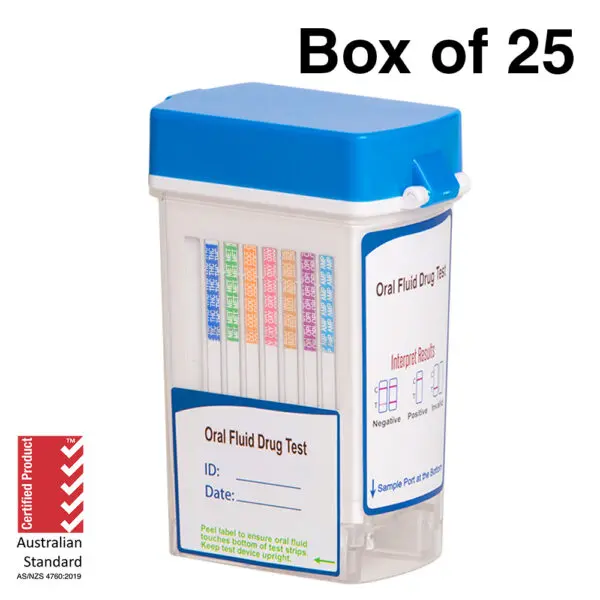
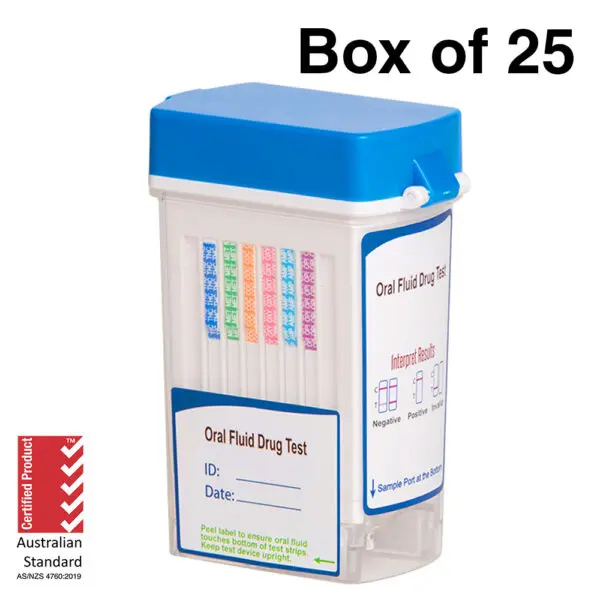
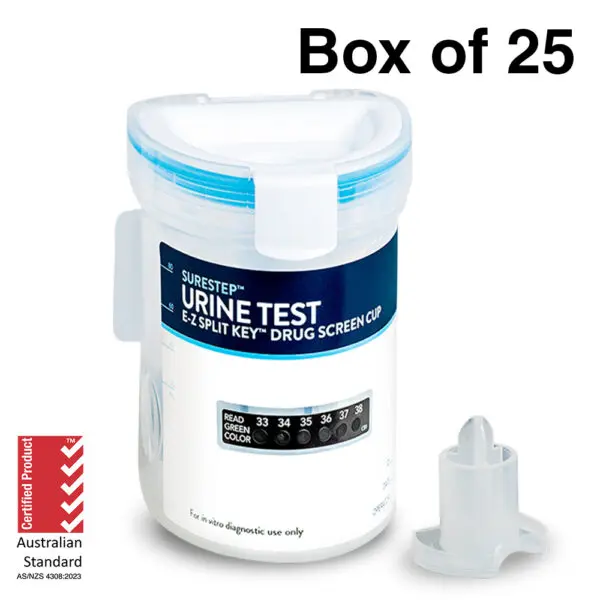
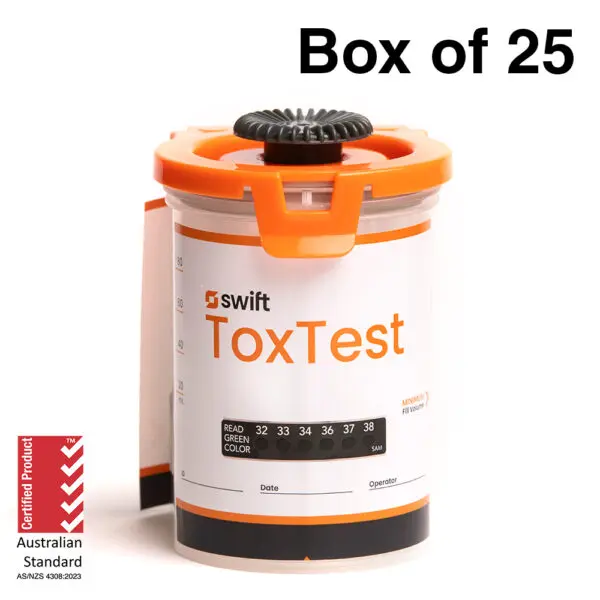
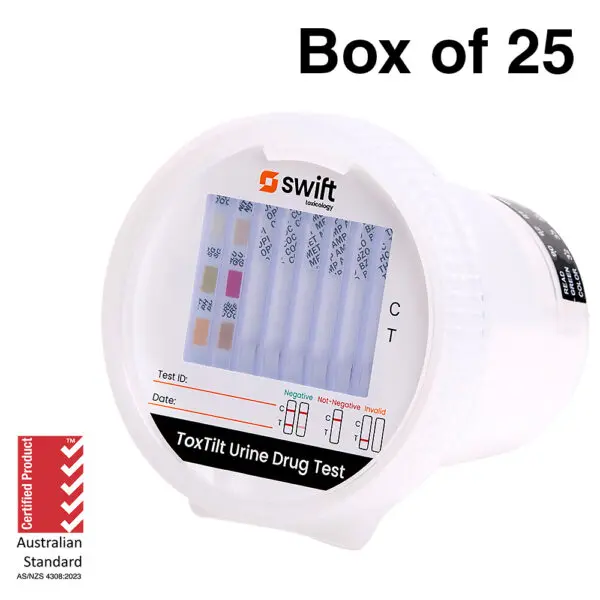
Onsite screening utilizes immunoassay devices—commonly cups or strips—to assess whether a sample has surpassed the cut-off threshold for designated drug classes. The results will indicate either negative or not-negative outcomes. It is important to note that a not-negative screen result does not confirm drug use or impairment; rather, it signifies that the specimen necessitates laboratory analysis before any definitive conclusions can be made or actions taken. Onsite devices must be validated to ensure compliance with AS/NZS 4308:2023 cut-off thresholds to yield valid results. Devices manufactured in 2008 may not conform to the updated standards and, as such, may not be suitable for producing reliable results.
Laboratory Confirmation Testing
When an on-site screening yields a not-negative result, the specimen is forwarded to an accredited laboratory for confirmation through gas chromatography-mass spectrometry (GC-MS) — a precise technique that identifies specific drug metabolites and their concentrations.
Confirmation testing has its own distinct cut-off thresholds, which are typically lower than those used for screening. In accordance with the AS/NZS 4308:2023 standard, any disputed confirmation testing results must be communicated to both the donor and the original laboratory conducting the tests. This provides employees with a greater opportunity to contest the results obtained from the testing.
What Changed in AS/NZS 4308:2023
The 2023 revision brought about notable updates:
- Cocaine detection: The screening threshold has been lowered from 300 µg/L to 150 µg/L; the confirmatory threshold has been adjusted from 150 µg/L to 100 µg/L — thereby narrowing the gap between the two to minimize inconsistent results.
- Benzodiazepines: The confirmatory threshold has been decreased from 200 µg/L to 100 µg/L, enhancing the alignment between onsite and laboratory results.
- Terminology: The term “non-negative” has been revised to “not-negative.” This change aims to alleviate confusion regarding preliminary test results.
- Informed consent: Donors are now required to be better informed about their rights, including the process for disputing a result.
- Disputed results: Reports will now be dispatched to both the donor who tested positive and the laboratory that conducted the test.
- Transition period: Both versions of the standard will remain valid until November 2026, allowing laboratories, agencies, and device manufacturers sufficient time to make necessary updates.
No modifications were made to THC (cannabis) thresholds — those cut-off levels continue to align with the 2008 standard.
How AS/NZS 4308:2023 Affects Your Testing Program
Employers are expected to respond to the implementation of AS/NZS 4308:2023 with an increase in the rate of “not-negative” results. The adjustment of the screening threshold for cocaine from 300 µg/L to 150 µg/L could lead to a rise in the number of samples that are referred. Consequently, employers operating in high-risk sectors, such as transport and construction, should prepare for longer testing turnaround times and potential additional laboratory costs.
Another operational consideration is the possible effects on the compatibility of on-site testing devices. Urine test cups and strips that were validated using the previous 2008 cut-off may not meet the requirements of the new standard. As more testing providers have already begun updating their validated devices to accommodate the revised cut-off values, it is essential for employers to verify whether their current equipment adheres to the new standards.
Preparing for the November 2026 Deadline
While a three-year transitional period is in effect until November 2026, during which both standards are applicable, numerous large testing providers have already transitioned. To ensure your program remains up-to-date:
- Verify that your testing provider and laboratory have adopted AS/NZS 4308:2023. Results reported post-transition must specify which standard was utilized.
- Ensure that on-site testing devices are validated for the 2023 cut-off levels. Several manufacturers have introduced updated cups that function across the complete accepted temperature range (32–38°C) with lowered cocaine detection thresholds.
- Educate all collectors and relevant personnel on the revised informed consent declaration, which is now included in the chain-of-custody form.
- Revise internal program documents to incorporate the terms “Not-Negative” and the disputed result process outlined in the 2023 standard.
Conclusion
AS/NZS 4308:2023 sets the standard for best practices in workplace urine drug testing in Australia and New Zealand. Enhancements in drug detectability, along with increased employee protection, will lead to a reduction in disputes concerning test results. It is important to understand that adherence to this standard is not merely a formality; it involves ensuring that your organization makes equitable employment decisions that can endure legal examination.
This information is intended as a guide only. It is advisable to seek independent counsel when making decisions.
Australian Standards Certified
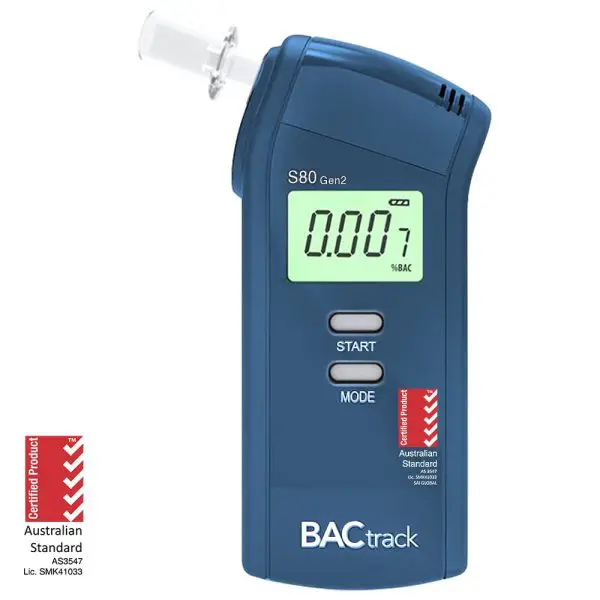
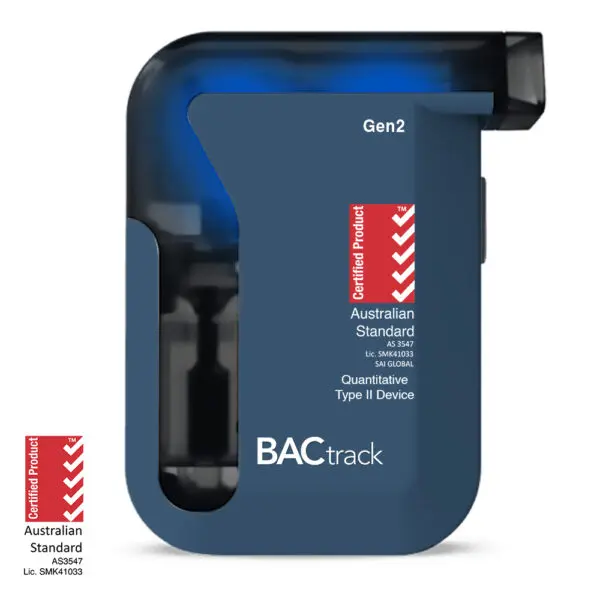
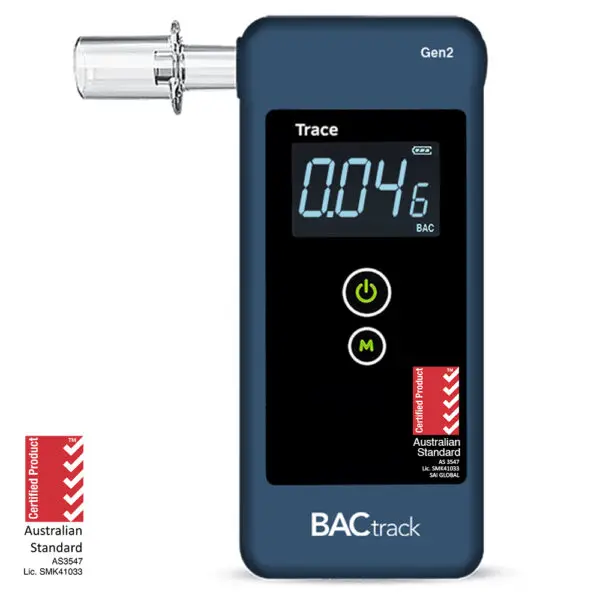
Breathalyzers New Zealand is an Australian Standards-certified company that produces Australian Standards-certified products.
Frequently Asked Questions
We have 2 x shipping options:
• Uninsured: $12.97
• Insured: $14.97
Each of our breathalyzers comes with a warranty that varies between 12 and 36 months. To submit a warranty claim, please log in to your account.
All orders submitted prior to 9am each weekday will be shipped on the same day.
To help you choose the right product for your needs, please click on the blue “Help Me Choose” button located at the top of every webpage. Additionally, you may refer to our three detailed Buying Guides. They can be accessed here: Personal Breathalyzer, Workplace Breathalyzer, or Workplace Drug Test Kits.
Yes. We are available to talk further about bulk order purchases. To submit an inquiry, please follow this link: Contact Us.
Purchasing drug and alcohol testing devices in bulk can lead to considerable cost reductions and enhance the efficiency of workplace testing. Organizations that routinely screen employees frequently opt to buy larger quantities to uphold compliance programs and lower the cost per test. Additionally, bulk purchasing guarantees a steady supply of stock and minimizes interruptions when testing is necessary. Breathalysers New Zealand provides discounts for bulk purchases, which can be found at the top of each of our drug testing product pages.
The market for workplace drug testing is gradually transitioning towards saliva testing, attributed to its convenience, rapid results, and enhanced capability to detect recent drug use. Urine testing, however, remains prevalent in certain workplace settings, laboratory environments, and industries that necessitate longer detection periods or historical usage assessments. Both testing methods continue to play an important role, depending on the specific requirements of the workplace and compliance mandates. We estimate that the current usage in workplaces is approximately 55% saliva testing compared to 45% urine testing.
Please review our Workplace Drug Testing Compliance Guide, which can be accessed here: Workplace Drug Test Compliance Guide.
Any organization seeking to maximise employee performance and address the risks associated with drug and alcohol use must implement clear policies. This is particularly vital in sectors where safety is paramount. Employers have a responsibility to foster a safe workplace and may develop policies to support this obligation. A clearly articulated policy helps ensure consistency across the organization and reduces the likelihood of legal consequences.
Explore Our Range of Australian Standard Compliant Breathalyzers